
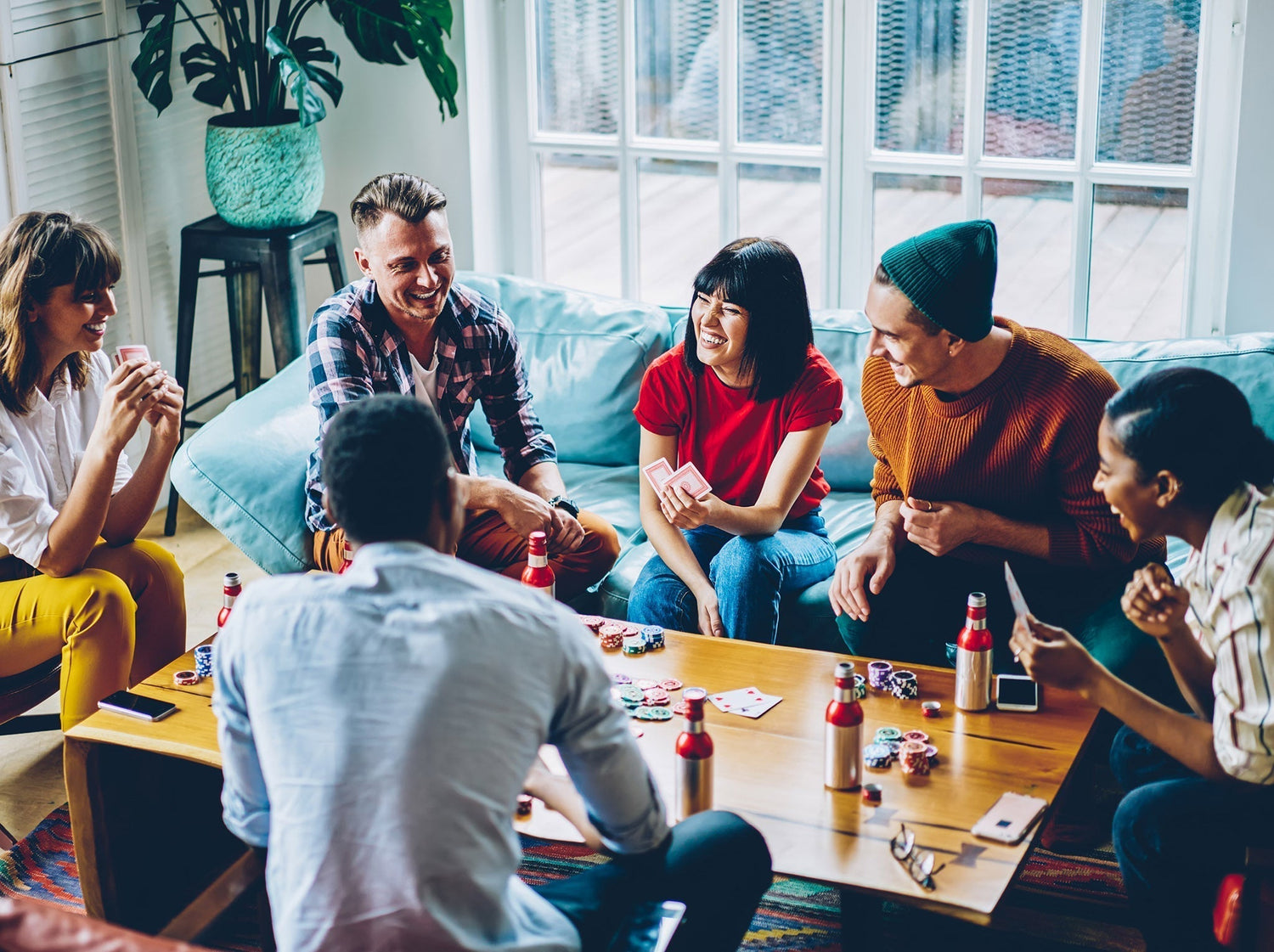
"Games people play" isn't just a song lyric — it's one of the most enjoyable things you can do for your brain. Grab a deck of cards, dust off a board game, or fire up the console: playtime is brain training in disguise.
Your brain is a muscle. Play is the gym.
We tend to think of games as a break from thinking. In reality, they're some of the most complete mental workouts there are. A good game asks you to remember, plan, adapt, read other people, and solve problems on the fly — all while you're having too much fun to notice you're working.
And here's the encouraging part: the brain keeps adapting throughout your whole life. The more you challenge it, the more it grows and reshapes itself. Games just happen to be one of the most fun ways to give it that challenge.
Seven ways games train your brain
Memory
Remembering rules, cards played, and past moves gives your recall a steady, low-effort workout.
Strategic thinking
Chess, Scrabble, and card games reward planning ahead and spotting patterns before they unfold.
Attention & focus
Staying in a game for a stretch trains sustained concentration — the same focus the rest of your day depends on.
Executive function
Deciding, waiting your turn, weighing risk — games quietly sharpen the brain's "management" skills.
Problem-solving
Every game throws challenges at you and asks for a solution — reps for critical thinking under pressure.
Social & mood
Game night connects people, lifts your mood, and turns learning into something you actually look forward to.
Neural reorganization
Regular play is linked to the brain rewiring the networks behind attention, working memory, and problem-solving.
Play can help your brain grow
Ever heard of gray matter? It's the outer layer of your brain, and it's in charge of some big jobs — controlling movement, holding onto memories, and regulating your emotions. Research on video gaming suggests that mentally rich play can support this part of the brain. The takeaway is simple: the more you learn and challenge yourself, the more your brain can grow and adapt.
Which game for which skill?
There's no single "best" game — each type flexes a slightly different set of mental muscles. Mix and match.
| Game type | Especially good for | Try |
|---|---|---|
| Board games | Strategy, patience, and social connection | Chess, Catan, Scrabble |
| Card games | Memory, quick math, and reading opponents | Poker, Rummy, Hearts |
| Video games | Reaction time, spatial skills, and focus | Puzzle, strategy, and adventure titles |
It's not only about getting "smarter"
The cognitive perks get the headlines, but some of the biggest wins are emotional. Games pull people together, spark laughter, ease stress, and keep curiosity alive. That blend of mental challenge and genuine enjoyment is a big part of why play is so good for you — a healthy brain and a happy one tend to travel together.
Start today — no screen required
A few easy ways to get playing tonight:
• Deal out a deck of cards with family or friends.
• Pull that dusty board game off the top shelf of the closet.
• Fire up the Switch, Xbox, or PlayStation — or borrow the kids'.
• Keep a quick puzzle or chess app on your phone for spare moments.
And while you can absolutely train your brain from the couch, don't forget the world outside the card table. Getting out and enjoying life is good for your mind too — but that's a topic for another post.
Keep your brain in the game
Supporting a healthy brain doesn't have to mean flashcards and hard work. Sometimes it looks like a deck of cards, a full table, and a lot of laughing. At BRAiNLUBE, we're all about giving your mind what it needs to stay sharp — and a good game might be one of the most fun ways to do exactly that.
Sip smarter. Live brighter. And play a little.
