
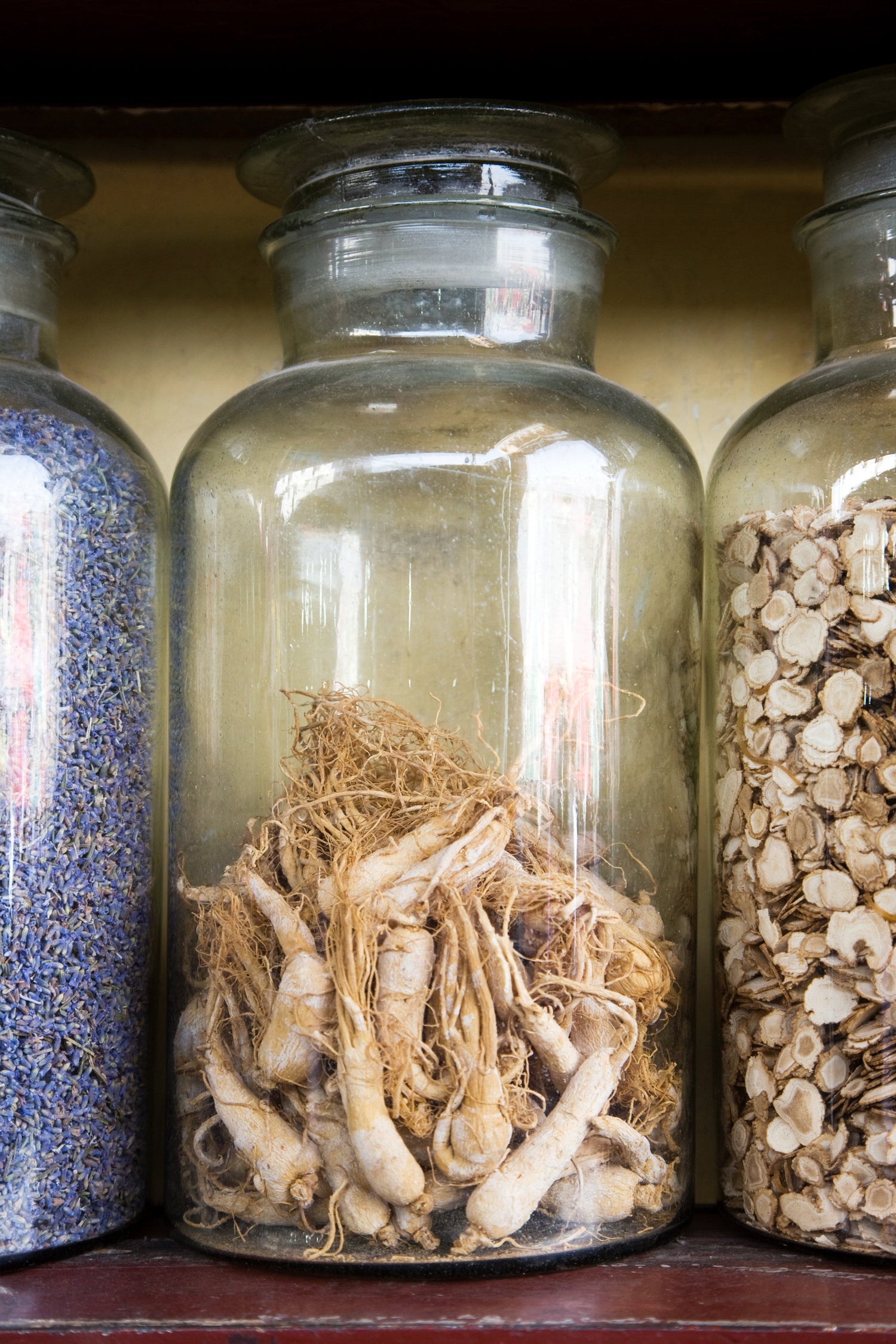
The short version: ginkgo biloba is one of the most-researched plants in the world for brain circulation and age-related memory support — but it's not a miracle nootropic. Here's what the science actually backs, and why it earns a spot in the BRAiNLUBE Energy Blend anyway.
A Living Fossil With a Modern Job
Ginkgo biloba trees have been around for roughly 200 million years, largely unchanged, which is why people call it a "living fossil." It survived ice ages, mass extinctions, and — famously — the Hiroshima bombing, where ginkgo trees near ground zero were among the few living things to make it through and are still standing today. Resilient doesn't begin to cover it.
Long before it showed up in supplement aisles, ginkgo leaf extract was used in traditional Chinese medicine for centuries, generally for circulation and general vitality. Modern researchers got curious about the same thing: does something in this leaf actually affect blood flow, and if so, does that matter for the brain? That question has produced more clinical research on ginkgo than on almost any other botanical extract on the market.
What Ginkgo Is Actually Studied For
Most of the research clusters around two related ideas:
1. Circulation, including to the brain
Ginkgo extract contains flavonoids and terpenoids (ginkgolides and bilobalide, if you want the specific names) that are commonly studied for their effects on blood vessel tone and blood flow. The working theory is straightforward: your brain is metabolically greedy — it uses a disproportionate share of your oxygen and glucose relative to its size — so anything that supports healthy circulation could, in theory, support the delivery of what brain tissue needs to function well.
2. Memory and cognitive performance, particularly with age
This is where ginkgo has gotten the most attention, especially in older adults dealing with normal age-related cognitive decline. Research in this area has looked at things like recall, processing speed, and general cognitive function scores. Some studies point to modest benefits here, especially over longer periods of use. Others show no meaningful difference from placebo. It's a mixed picture — and worth being upfront about that instead of cherry-picking the studies that make the best marketing copy.
"The honest answer is rarely the exciting one — but it's the one worth trusting."
What the Evidence Actually Supports vs. the Hype
Here's where we try to separate what's reasonably well-supported from what's gotten oversold in the wellness world.
| Common Claim | What Research Actually Suggests |
|---|---|
| "Ginkgo cures memory loss" | No. It's studied for supporting normal, age-related cognitive function — not treating or reversing any diagnosed condition. |
| "It instantly boosts focus" | Most research looks at consistent use over weeks, not a single dose. This isn't a flip-a-switch ingredient. |
| "It supports circulation, including to the brain" | This is one of the more consistently studied and better-supported uses of ginkgo extract. |
| "It's a proven treatment for dementia" | Not accurate — and not a claim we or any credible source should make. Findings here are inconsistent and it is not a substitute for medical care. |
The fairest summary: ginkgo is one of the most well-documented combinations of "traditional use plus modern circulation research" in the botanical world, and it's commonly included in cognitive-support formulas for that reason. It is not a proven treatment for any memory disorder, and anyone telling you otherwise is selling harder than the evidence supports.
A Few Practical Notes
Ginkgo is generally recognized as one of the more extensively studied botanical extracts for tolerability at typical doses, but "well-studied" isn't the same as "risk-free for everyone." It can interact with blood-thinning medications, and — like anything — it's worth a conversation with a doctor if you're on medication, pregnant, nursing, or managing a health condition. This is structure/function information, not medical advice.
Why BRAiNLUBE Includes It
We built the BRAiNLUBE Energy Blend around the idea that "energy" and "focus" aren't the same thing, and that getting both from real, whole-source ingredients beats stacking sugar and synthetic caffeine and hoping for the best. Ginkgo biloba earns its place in that blend for exactly the reasons above: it's one of the oldest, most-researched botanicals for circulation and age-related cognitive performance, and it pairs naturally with the rest of the lineup — taurine, guarana seed extract, ginseng root extract, green coffee bean extract, ashwagandha root extract, L-citrulline, bacopa monnieri, L-tyrosine, L-theanine, and inositol — all working alongside the 130mg of caffeine in every can.
That caffeine, by the way, comes from real sources — not just a synthetic jolt — and it's balanced with L-theanine specifically to smooth out the jittery edges and crash that come with a typical energy drink. Ginkgo isn't the star of that show. It's one instrument in the orchestra, included because the research on it — hedged and honest as it is — points in a direction worth building around.
We'd rather tell you what ginkgo is actually studied for than oversell what it does. That's the whole philosophy behind BRAiNLUBE: clean, focused energy, built on ingredients that have a real reason to be in the can — not because they sound impressive on a label, but because the research, honestly read, backs them up.
Sip smarter. Live brighter.
These statements have not been evaluated by the Food and Drug Administration. This product is not intended to diagnose, treat, cure, or prevent any disease.
