
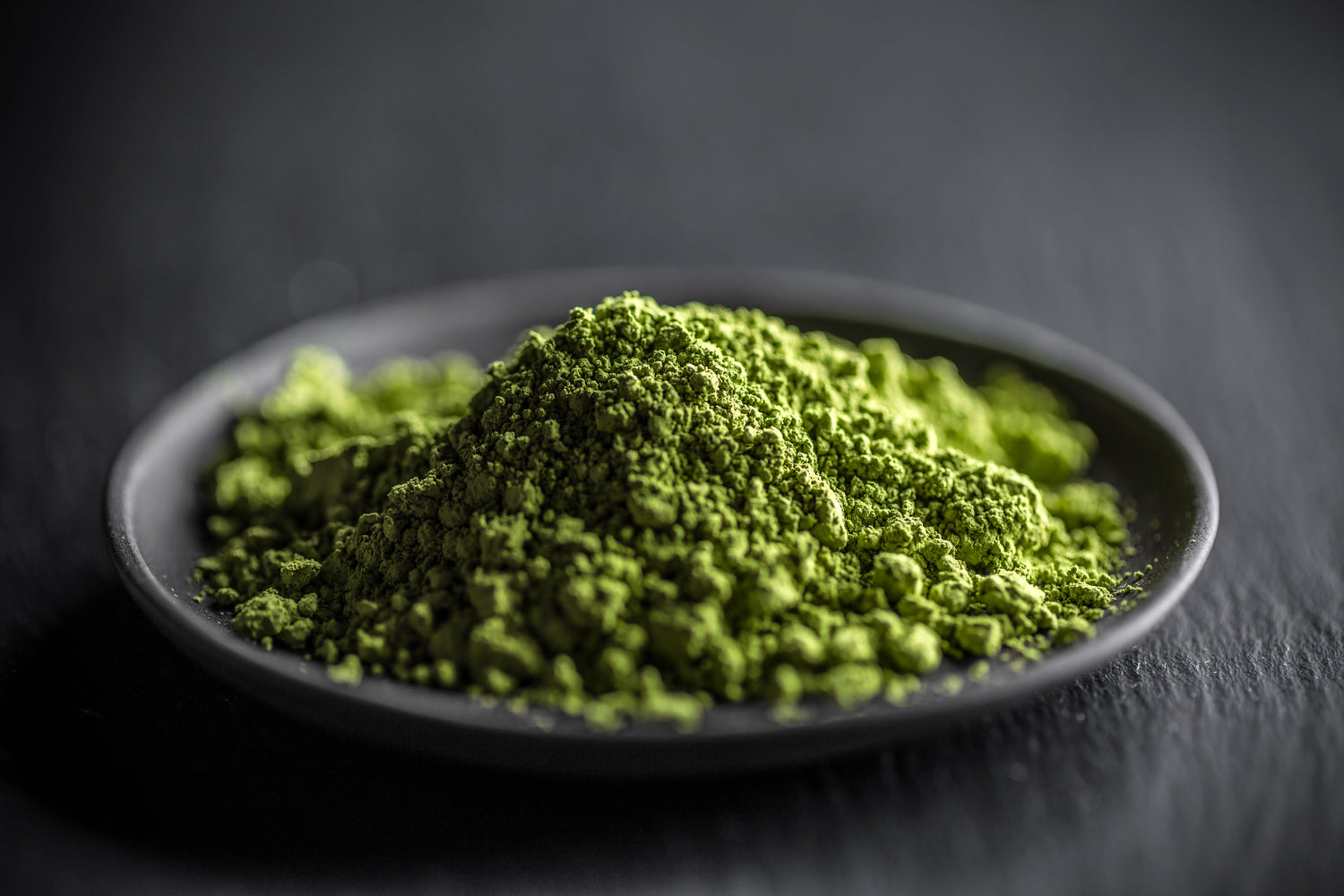
The short version: tea has quietly paired caffeine with L-theanine for thousands of years, and it turns out that combo is one of the most well-documented pairings in the nootropic world. That's exactly why BRAiNLUBE doesn't just throw 130mg of caffeine at you and call it a day — L-theanine rides shotgun in every can.
The Accidental Biohack Hiding in Your Teacup
Long before "nootropic" was a word anyone used outside a lab, people were brewing tea leaves and feeling something distinct from coffee. Alert, yes — but not wired. Focused, but not jittery. For centuries, nobody could really explain why. Turns out tea leaves naturally contain both caffeine and an amino acid called L-theanine, and the two seem to have been working as a team the whole time.
That's the quiet irony at the center of the modern energy drink aisle: most of it is built around caffeine alone, often stacked on a pile of sugar, chasing an effect that tea plants figured out on their own a long time ago.
So What Is L-Theanine, Actually?
L-theanine is an amino acid found almost exclusively in tea plants (and, in smaller amounts, a few types of mushrooms). It's not a stimulant and it's not a sedative — it occupies its own lane. It's commonly studied for its relationship to alpha brain wave activity, the kind associated with a relaxed-but-alert mental state. Think "calm focus" rather than "sleepy" or "wired."
On its own, L-theanine tends to promote a sense of ease without drowsiness. That's interesting. But it's what happens when you put it next to caffeine that's really caught researchers' attention.
Caffeine Alone: Great Engine, Rough Ride
Caffeine works. It blocks adenosine, the molecule that makes you feel drowsy, and it revs up your central nervous system. That's why it's the most widely used stimulant on the planet. But caffeine solo has a well-known downside: the jittery edge, the racing heart, the mental static that can creep in an hour or two after that big gas-station energy drink, and eventually, the crash.
None of that means caffeine is bad. It means caffeine by itself is a blunt instrument. Pair it with something that smooths its rough edges, and you get a very different experience.
"Tea drinkers weren't chasing a buzz. They were chasing focus that doesn't fight back."
The Stack: Why 1 + 1 Doesn't Equal Jittery
This is where the L-theanine + caffeine combination has built its reputation. It's one of the most frequently studied pairings in the nootropic space, and for good reason: the two appear to counterbalance each other. Caffeine brings the alertness and drive. L-theanine appears to take the edge off — smoothing out the spike, softening the jitters, and helping sustain a steadier, more even kind of focus instead of a hard launch followed by a hard landing.
Researchers who study this pairing often describe the resulting state as "calm alertness" — attentive and quick without the frayed-wire feeling. It's the difference between energy that feels like a shove and energy that feels like a steady hand on the wheel.
| Caffeine Alone | Caffeine + L-Theanine |
|---|---|
| Sharp initial spike | More even, sustained lift |
| Jitters and restlessness for some | Commonly reported as smoother, calmer |
| Can fray focus under pressure | Associated with steadier attention |
| The dreaded crash | Landing tends to feel softer |
Nobody's claiming this combination turns you into a superhuman or erases every side effect of caffeine — sensitivity varies person to person, and this isn't a magic trick. But as far as well-studied, real-world nootropic pairings go, this one has staying power for a reason.
Why Tea Never Felt Like a Gas-Station Energy Drink
This is also probably why a cup of good green or black tea has always felt different from a can of straight caffeine and sugar, even though both contain caffeine. The theanine was there the whole time, working quietly in the background. Tea drinkers didn't need a research paper to notice the difference — they just kept coming back to the teapot instead of the coffee pot for a reason they couldn't quite name.
Why BRAiNLUBE Builds Around This Stack on Purpose
When Steve Land and his team set out to build BRAiNLUBE, the goal was never "more caffeine." It was clean, focused energy — the kind you can actually use for deep work, a long drive, exam prep, or a stretch of back-to-back meetings, without the shaky hands or the 3pm crash that undoes the whole point.
That's why every can carries 130mg of caffeine — roughly a strong cup of coffee — deliberately paired with L-theanine as part of the full BRAiNLUBE Energy Blend, alongside taurine, guarana seed extract, ginseng root extract, green coffee bean extract, ashwagandha root extract, L-citrulline, bacopa monnieri, L-tyrosine, ginkgo biloba, and inositol. The L-theanine isn't a garnish. It's there because caffeine without it is only half the equation tea drinkers already understood.
This is also part of why BRAiNLUBE isn't positioned as a daily-habit drink you crush every morning out of routine. It's built for the days that actually demand more from your brain — and dosed like it.
The Bigger Picture
The energy drink industry spent decades optimizing for one thing: how much caffeine and sugar can you cram into a can. Tea culture spent centuries quietly proving there was a smarter way to get alert — pair the stimulant with something that keeps it in check. BRAiNLUBE just takes that same logic and builds it into a 12oz can made with real clarified mango juice instead of a tea bag.
Two cans a day, max. Not intended for anyone under 18, and not recommended if you're sensitive to caffeine, pregnant, or nursing. Simple, honest guardrails for a product built around a combination that's been hiding in plain sight since the first teapot.
Sip smarter. Live brighter.
These statements have not been evaluated by the Food and Drug Administration. This product is not intended to diagnose, treat, cure, or prevent any disease.
